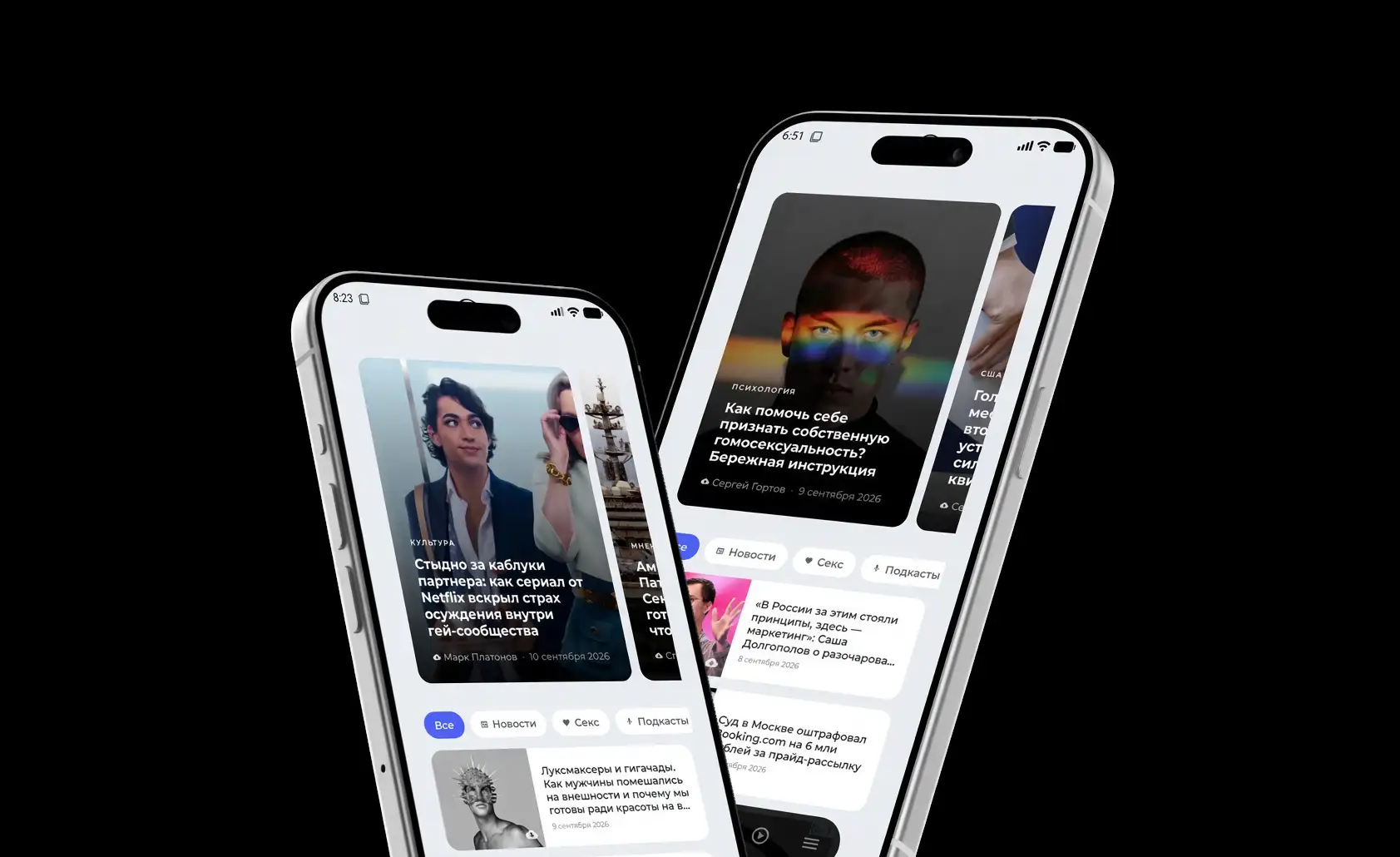
Independent LGBTQ+ nonprofit media organization Doberman Media has launched its own mobile application for Android. The app is now available on Google Play and provides a new way to read Doberman Media content, watch videos, listen to radio and save articles for offline reading.
The launch is an important step in the development of Doberman Media as an independent media project creating content for Russian-speaking LGBTQ+ people living across Europe and beyond.

Doberman Media in your pocket
Offline reading, QueerTube, radio and AI-powered article analysis, now available in the Android app.
What the app offers
The app brings together the main formats and services of Doberman Media in one place.
Users can read the latest articles, save publications and continue reading without an internet connection. Recent articles are automatically stored on the device for a selected period, while bookmarked articles remain available offline regardless of the cache retention period.
The app also includes QueerTube, Doberman Media’s own video platform. Users can watch interviews, original videos, livestreams and other content there.
Another section of the app is dedicated to radio. Users can listen to live broadcasts from ON GAY and GAY FM in Germany.
Discuss articles with AI
One of the new features of the app allows users to send Doberman Media articles directly to popular AI services.
Buttons for opening an article in ChatGPT, Claude, Gemini and Grok are available at the end of publications.
The feature is designed to go beyond simply asking AI to summarize an article. Custom prompts encourage AI tools to analyze the material, provide additional context and identify other Doberman Media publications related to the same topic.
This means that an individual article can become a starting point for exploring a subject in greater depth.
Built by a small team
The Android app was developed by a small Doberman Media team without a dedicated grant or external funding for the app’s development.
For an independent nonprofit organization, this has been a significant technical project. The team worked on the app’s architecture, interface, offline reading, video platform integration, radio and other features largely with its own resources.
The first version of the app is still at an early stage of development. The team therefore expects feedback from users and will continue fixing technical issues and adding new features.
We believe the app should be developed together with its audience. Real user feedback will help us understand which features are genuinely useful and where development efforts should be focused in future versions.
What’s next
The Android launch is only the first stage.
The next major step will be the development of an iOS version. Its launch is currently expected in winter 2026/2027. The pace of further development will also depend on the funding available to the project.
Until then, iPhone and iPad users can continue using the mobile version of the Doberman Media website and install it on their devices as a PWA.
Why this matters to Doberman Media
For us, the mobile app is more than just another way to access a website.
We want to build independent digital infrastructure for LGBTQ+ media that can reach audiences across different platforms. The app allows us to bring together written journalism, video, radio and new ways of interacting with content in one place.
At the same time, Doberman Media remains an independent nonprofit project. We did not receive external funding specifically for the development of the app and continue to develop the project largely through the work of our team, volunteers and supporters.
That makes two things especially important right now: user feedback and financial support.
Support helps us continue developing the app, work on the iOS version, maintain our infrastructure and further develop the media project itself.
Doberman Media in your pocket
Offline reading, QueerTube, radio and AI-powered article analysis, now available in the Android app.
The Doberman Media Android app is now available on Google Play.
If you notice a technical issue or have a suggestion for improving the app, you can contact the Doberman Media team at [email protected].
We are also open to working with information security professionals and independent security testers. For us, it is important not simply to make claims about security, but to remain open to external testing and address issues that may be identified.